Case Study | Compact CIS Inspection for Battery Electrode Cutting and Stacking
INSNEX's close-range CIS system addresses the tight installation space and demanding image quality of battery electrode cutting and stacking. Six technical advantages help standardize imaging and improve inspection workflows.



Inspection inside a cutting-and-stacking machine
Battery electrode cutting and stacking leaves little room for cameras. Uneven sheets, curled corners, dust, and low contrast against the conveyor can also cause inconsistent images and false edge detections.
Imaging and edge detection
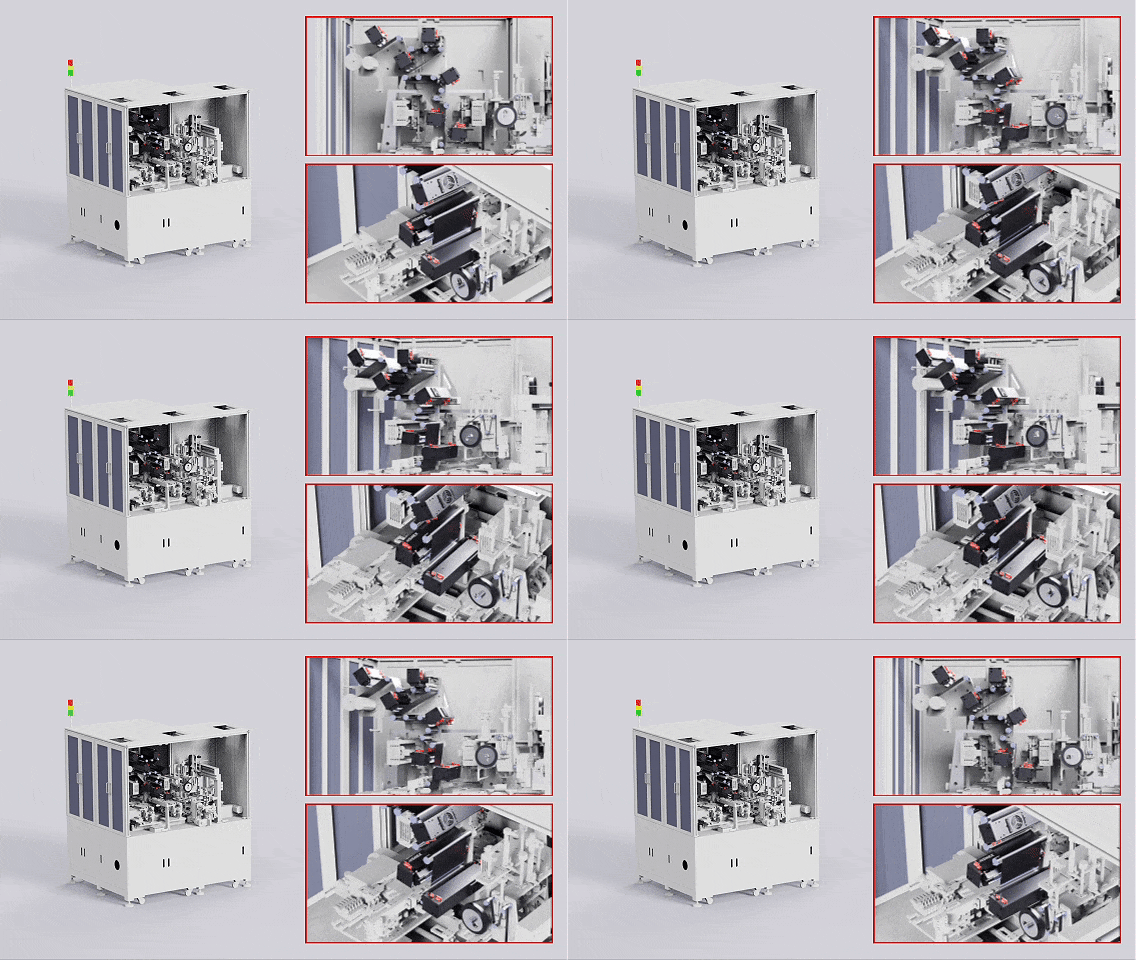
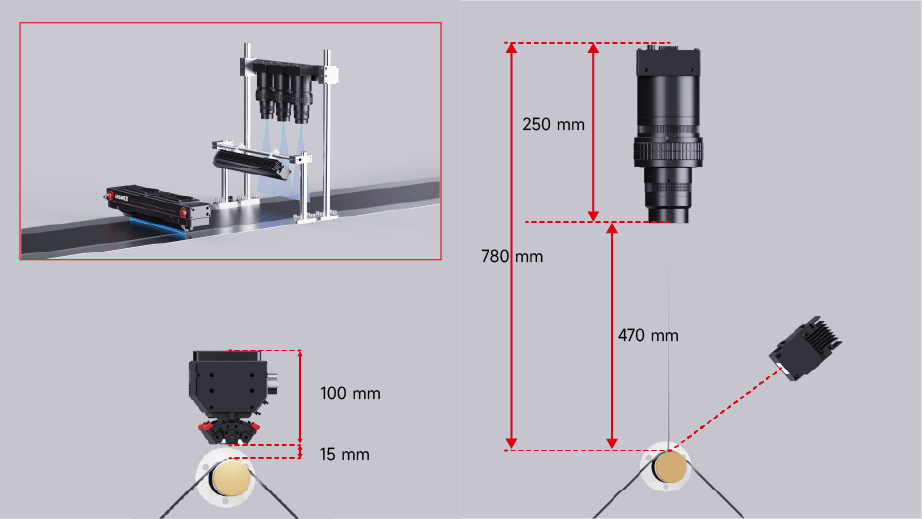
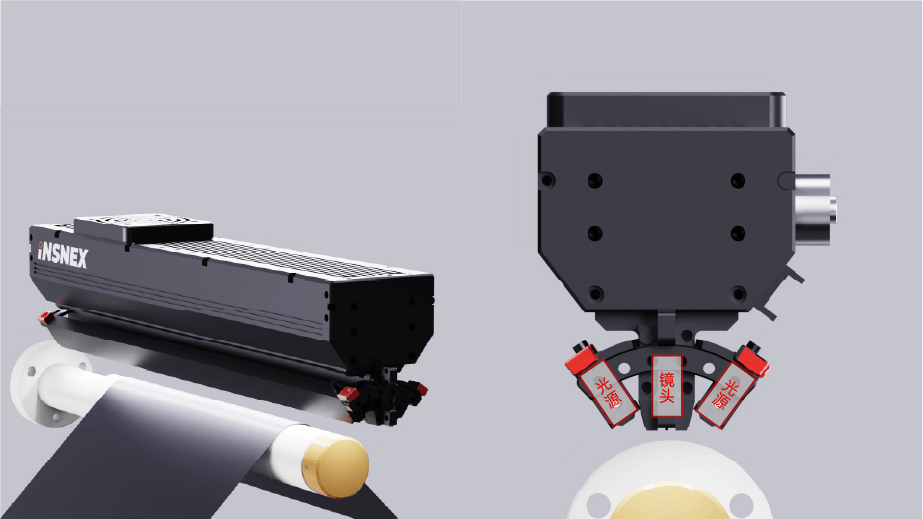
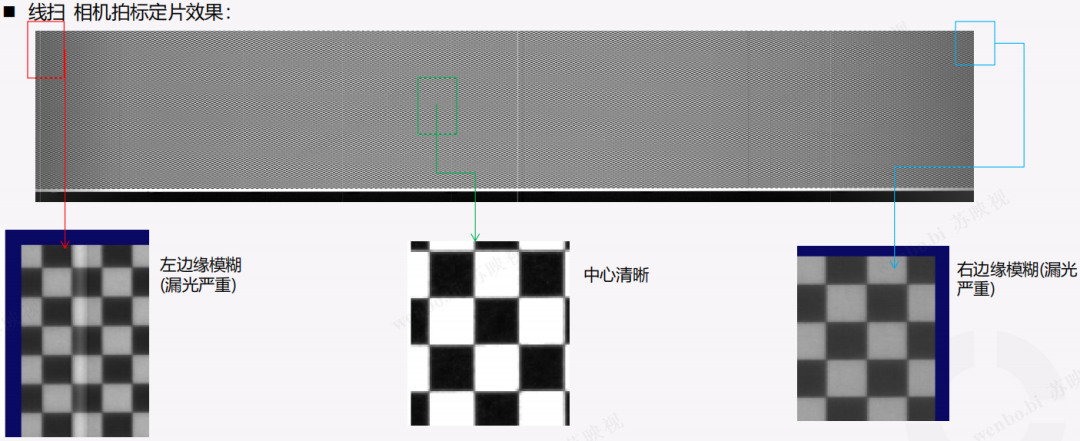
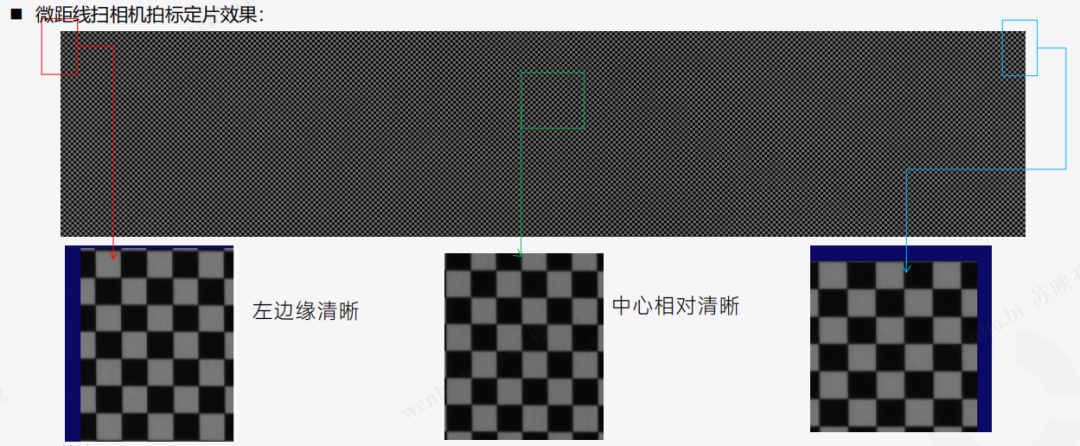
In the old layout, the camera could require more than 400 mm working distance and over 700 mm installation height, plus extra rollers to guide the electrode web. The close-range layout uses a 15 mm working distance and 130 mm total height. Its integrated optics avoid the dark corners and blurred edges that complicate calibration with conventional lenses.
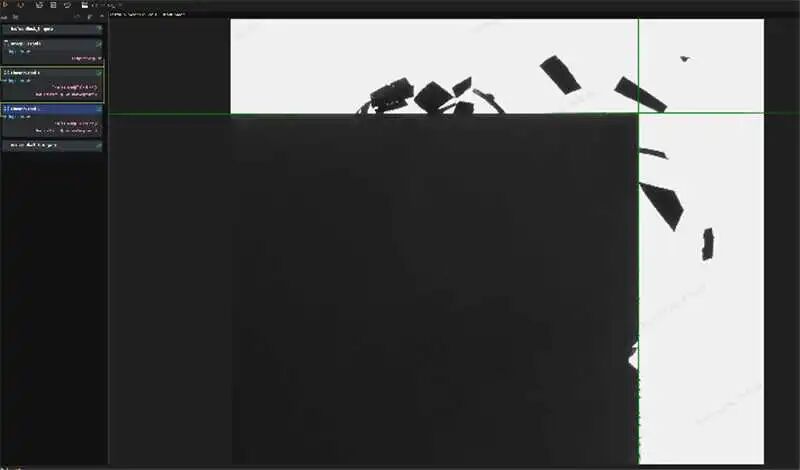
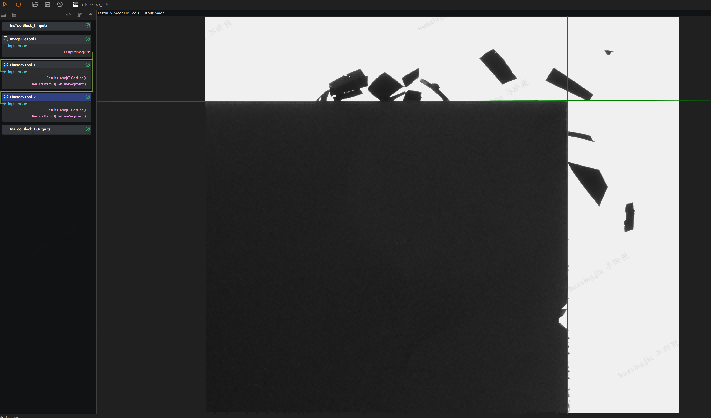
Powder particles sometimes touch an electrode edge and look like part of the boundary. LineMax fits the expected line after excluding points with inconsistent distance or gradient direction. This makes width and edge measurements more robust when the web is dusty or low contrast.
Continuous improvement
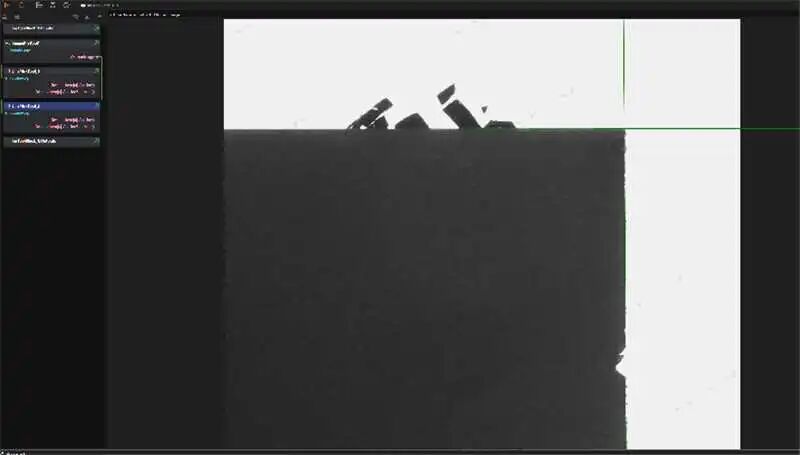
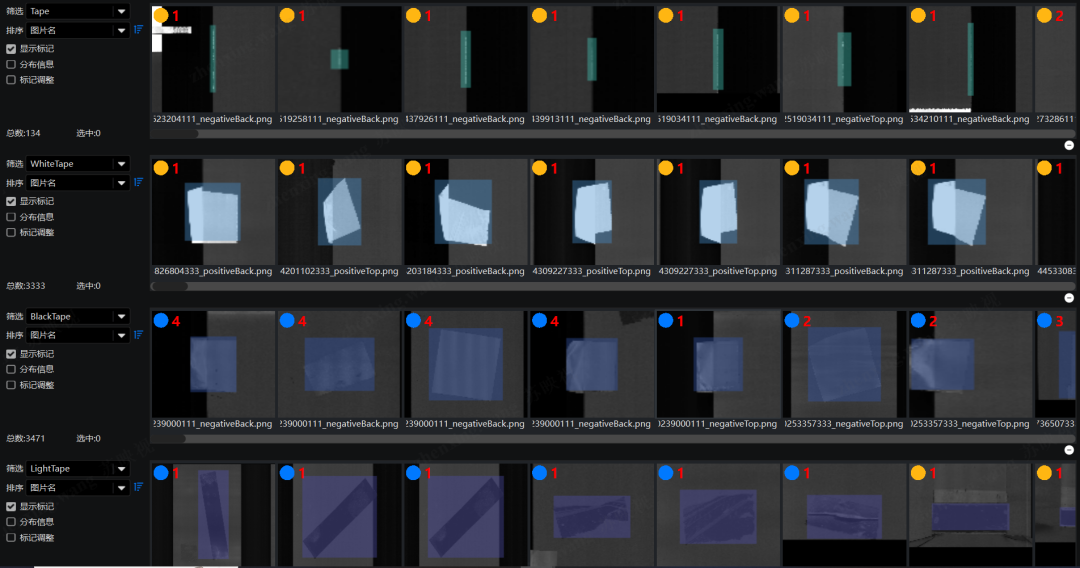
A library of defective images supports new AI training runs. Operators can label examples and update the model when new defect types appear; inspection images, locations, results, and statistics remain linked for review and process improvement.
Six improvements
A 15 mm working distance and 130 mm total Z-axis space reduce the camera footprint by more than 80% compared with the previous layout. The integrated camera, optics, and lighting cut mechanical design and coordination time by over 50% and simplify installation on new and existing machines.
Uniform, distortion-free 1:1 imaging keeps edges sharp across the field. The LineMax edge tool rejects dust-related outliers using point distance and gradient direction, reducing false rejects caused by edge errors by more than 95%.
A defect-image library and InsWorks AI tools let the customer train new defect models. A linked data browser brings images, positions, results, and statistics together for faster review.


Customer outcome
The compact system improved image consistency and reduced retrofit work. The customer can update AI models independently as new defects appear.